Protect Your Orlando Restaurant From Costly Grease Problems
Grease trap pumping in Orlando is one of those jobs that no one really wants to think about, but every restaurant needs. A busy kitchen sends a lot of greasy water down the drains, especially during tourist peaks, holidays, and big events. If that grease has nowhere to go, it can come right back at you in the worst way.
When a grease trap is ignored, it can lead to backups during your busiest rush, strong smells drifting into the dining room, and even temporary shutdowns. Health inspectors do not like greasy floors or standing wastewater, and customers do not like odors near their food. Understanding how grease trap pumping works helps you stay compliant, avoid emergencies, and keep your restaurant's good name intact.
What Your Grease Trap Actually Does in a Busy Kitchen
In simple terms, a grease trap or interceptor is a box that slows down the water coming from your sinks and dish machines. When the water slows, fats, oils, and grease float to the top, food solids sink to the bottom, and clearer water flows out to the sewer line or septic tank. The trap is there to catch the junk your plumbing cannot handle.
In a restaurant, grease trap water usually comes from:
- Dishwashing sinks and pre-rinse stations
- Food prep sinks where pans and trays are rinsed
- Floor drains near cook lines and fryers
- Dish machines and pot sinks
During heavy cooking times, like weekend nights or tourist season, that trap fills much faster. More plates, more fryers, more dishes, and more cleaning all add up. If your team is cooking a lot of fried food, you are sending even more fats and oils down the line, so the trap will hit its limit sooner.
When the trap reaches that limit, grease can start slipping past and clogging pipes, or it can back up into the kitchen. That is why regular grease trap pumping in Orlando is not just a box to check, it is part of keeping daily operations smooth.
Warning Signs Your Grease Trap Needs Pumping Now
Your grease trap usually sends out warning signs before it fails. Some common red flags are:
- Slow drains at sinks or floor drains that do not clear like they used to
- Gurgling sounds from pipes when water is draining
- Persistent odors in the kitchen, even after a deep clean
- Greasy water backing up into sinks, floor drains, or dish areas
Waiting until there is standing gray water on the floor is risky. At that point, you may be facing:
- Service interruptions during busy shifts
- Health department concerns or citations
- Extra cleanup time for your staff and possible damage to equipment
In Orlando's heat and humidity, grease and food waste do not stay mild for long. Odors can grow strong and invite pests if the trap is not pumped on a regular schedule. Staying ahead of these signs keeps your kitchen safer and your staff a lot less stressed.
How Often Orlando Restaurants Should Schedule Pumping
There is no single schedule that fits every restaurant, but there are common factors that affect how often you should pump:
- Size of your grease trap or interceptor
- Type of food you serve, heavy fried items vs lighter fare
- Hours of operation and late-night service
- Customer volume and seasonal tourist traffic
Mandatory pumping schedule from your municipality or local authority
Many full-service kitchens in our area end up needing grease trap pumping every 1 to 3 months. Busy places that serve a lot of fried food or run long hours may need service on the tighter end of that range. Smaller or lower-grease operations might stretch a bit longer, as long as inspections show the trap is not getting too full.
A simple way to handle it is to start with a conservative quarterly pumping schedule, then:
- Review inspection notes from your service provider
- Pay attention to how full the trap is at each service
- Adjust frequency around known rush periods and events
This keeps you from overdoing it, but also keeps you away from risky "wait until it fails" habits.
What to Expect During Professional Grease Trap Pumping
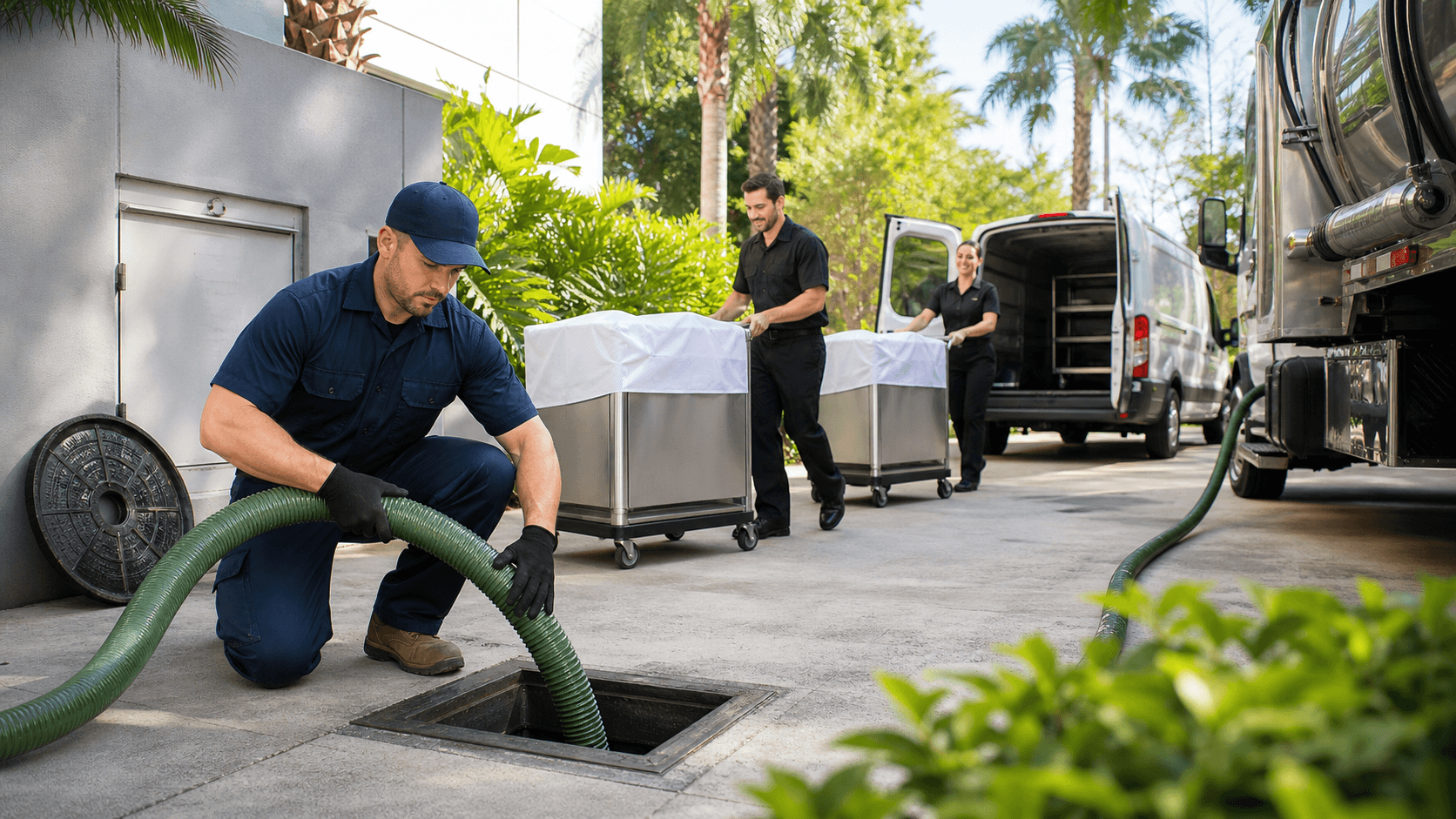
When a professional crew arrives, the process should be orderly and clear. Here is what usually happens:
- Arrival and a quick safety check of the area around the trap
- Opening the grease trap lid carefully to avoid splashes
- Measuring grease and solids levels to see how full it really is
- Pumping out all contents, including liquids, solids, and grease layer
- Scraping and cleaning the walls, baffles, and lid so buildup does not stay behind
Pressure washing the tank if needed to remove build up
- Final inspection for damage, wear, or signs of problems in or around the trap
There is a big difference between a quick skim and a full pump-and-clean. A skim might remove the top grease layer but leave heavy solids and dirty water behind. That leftover waste can still cause smells, clogs, and faster refills.
With full grease trap pumping in Orlando, the entire trap is emptied and cleaned, which:
- Helps prevent line clogs connected to the trap
- Cuts down on odors that spread in the heat
- Gives a clear view of any cracks or issues
Eliminate possible fines by the sewer entity
Proper waste hauling and disposal are also key. Your provider should keep pump-out records that show when service was done and what was removed. Those records are helpful for inspections and for planning your maintenance schedule.
Avoiding Grease Trap Emergencies With Staff Habits
Even the best pumping schedule will not help if daily habits in the kitchen work against you. Simple steps from your team can slow down how fast the trap fills up and reduce problems between service visits.
Good habits include:
- Scraping plates and pans into the trash before rinsing
- Using sink strainers to catch food scraps
- Wiping heavy grease from pans with paper towels before washing
- Keeping fryer oil in proper containers, never pouring it down a drain
It also helps to build quick checks into your opening and closing routines:
- Look for slow drains or standing water around sinks and floor drains
- Note any strange smells near the dish area or grease trap location
- Report repeated gurgling sounds or small backups right away
When staff members know what to watch for, they can flag issues before they become a flood on the floor. That makes each pumping visit more effective and keeps your kitchen running smoother.
Why Partnering With a Local Grease Trap Expert Matters
Working with a local, licensed company that understands Orlando and Central Florida restaurant needs can save you a lot of trouble over time. A trusted provider knows how busy seasons, late-night hours, and heavy fryer use affect your trap.
A good partner can:
- Help set up a simple maintenance schedule that fits your operation
- Keep detailed service records so you are ready for inspections
Keep you in compliance with submitting the required grease manifests to the governing entity
- Spot small warning signs that might point to pipe issues or trap damage
Anytime Septic is a family-owned septic company serving Orlando and the Central Florida area, and we handle grease trap and interceptor pumping, inspections, repairs, and installations for local businesses. We focus on clear communication, honest advice, and service that helps keep your restaurant compliant, open, and running smoothly all year long.
Call Anytime Septic for Expert Grease Trap Service
If you are noticing slow drains, odors, or you are unsure how often your grease trap should be pumped, give Anytime Septic a call. Our local team can inspect your system, recommend a maintenance schedule that fits your kitchen, and handle pumping, repairs, or new installations as needed.
Call Anytime Septic today to schedule grease trap service in Orlando or to get expert advice on keeping your restaurant's plumbing and grease management system in good shape.
Protect Your Kitchen With Reliable Grease Trap Service
If your kitchen is slowing down due to buildup, we can help you stay compliant and avoid costly backups with professional grease trap pumping in Orlando. At Anytime Septic, we work around your schedule to minimize downtime and keep your operation running smoothly. Reach out today to discuss your needs or contact us to book a service visit.