
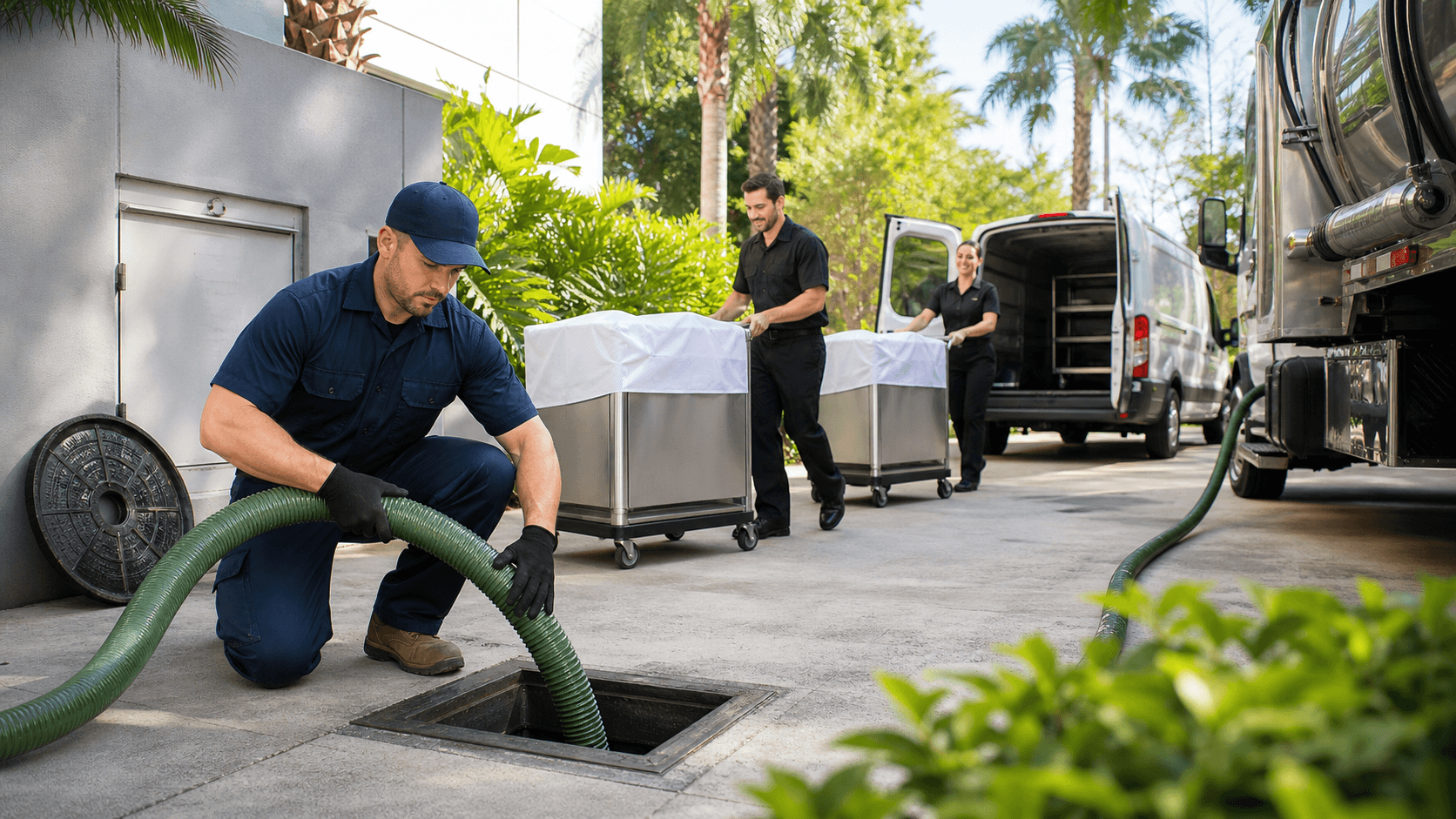
Keep Grease Flowing When Catering Orders Surge
More catering orders can change how often you need grease trap pumping in Orlando, even if your regular dine-in traffic stays the same. A kitchen that prepares large batches of food for weddings, corporate lunches, holiday parties, or fall festivals can send a sudden wave of fats, oils, and grease, often called FOG, into its plumbing.
October often brings a fuller event calendar across Central Florida. As holiday catering ramps up, we recommend looking at actual kitchen output instead of relying only on a fixed calendar date. Proactive pumping helps reduce the chance of slow drains, foul odors, backups, and interruptions when your team is trying to prepare for an important event.
Catering creates a different type of demand than routine meal service. You may prepare hundreds of meals in a short window, then wash pans, trays, utensils, and cookware all at once. That concentrated wastewater can fill a grease trap faster than expected.
Grease traps are designed to collect grease and food solids before wastewater moves farther through the plumbing system. Still, every trap has limited holding capacity. When catering becomes a regular part of your business, the pumping schedule may need to change with it.
Track the Kitchen Changes That Raise FOG Output
A fuller catering calendar is not the only reason grease trap loading can increase. Changes in staffing, prep methods, dishwashing volume, operating hours, and menu items can all add more FOG to the system.
Foods that commonly create more grease and solids include:
- Fried foods and cooking oils
- Bacon, roasted meats, and gravy
- Cheese-heavy dishes and creamy sauces
- Butter, fatty meats, and food scraps
Slow-draining sinks, recurring odors, grease near drain covers, and frequent clogs can all be signs that your current service schedule is no longer keeping up. We do not recommend waiting for wastewater to back up before reviewing your grease trap needs. A backup can disrupt food prep, create sanitation concerns, and require emergency plumbing attention during a busy service period.
Kitchen staff also play an important part in daily grease control. Scraping plates, collecting used cooking oil properly, and keeping food scraps out of sinks and floor drains can help reduce what reaches the trap. Even with good kitchen practices, however, high-volume catering can still require more frequent professional pumping.
We suggest keeping simple records of catering orders, menu changes, event dates, and previous pumping services. Those notes can make it easier for us to help you spot patterns and decide whether your maintenance interval should be adjusted.
Build a Pumping Schedule Around Your Event Calendar
The best grease trap schedule reflects both your normal kitchen activity and your upcoming high-volume periods. A trap that was serviced several weeks or months ago may not have enough available capacity for a packed catering schedule.
Before a major event period, we recommend reviewing:
- Upcoming weddings, conventions, parties, and community gatherings
- The number of meals and trays your kitchen expects to prepare
- Whether the menu includes more fried, creamy, cheesy, or meat-heavy items
- Your most recent pumping date and any recent drain concerns
Timing matters. Pumping shortly before a large catering rush gives the grease trap more room to handle the extra wastewater created during preparation and cleanup. After the event, monitoring drains and odors can help you see whether the trap is still performing as expected.
For businesses with predictable busy seasons, planning ahead can prevent surprises. Holiday catering, wedding seasons, sports events, recurring corporate clients, delivery growth, and banquet room bookings may all create a need for more frequent grease trap pumping in Orlando.
Our team at Anytime Septic can help you review your kitchen activity and determine whether your current service frequency matches the workload. This is especially helpful when catering changes from an occasional add-on to a regular source of business.
Protect Your Kitchen From Backups and Compliance Issues
Grease and solids can build up inside a trap long before trouble becomes obvious at the sink. By the time odors, clogs, or wastewater backups appear, the trap may already be overloaded. Routine professional pumping is a more reliable way to protect your plumbing and keep kitchen operations moving.
Maintenance records matter, too. We encourage you to keep pumping dates, service reports, grease manifests, and notes about unusually heavy kitchen activity. Clear records can help you plan future service and support your efforts to meet applicable wastewater and sanitation expectations.
When slow drains keep returning, the problem may involve more than the grease trap. We also provide sewer line cleaning and camera inspections for Orlando-area homes and businesses connected to city sewer. These services can help identify suspected blockages or buildup farther along the line.
For more than 40 years, our family-owned, licensed, and insured team has helped Central Florida property owners understand their septic, grease trap, drain, and sewer line needs. The practical takeaway is simple: when food production goes up, grease trap maintenance should be reviewed before the kitchen feels the impact.
Keep Your Kitchen Operations Running Smoothly
As catering volume shifts, we can help you set a practical service schedule that matches your kitchen's needs. Anytime Septic provides dependable grease trap pumping in Orlando to help reduce backups, odors, and interruptions. If you need guidance on your pumping frequency or want to schedule service, contact us for knowledgeable assistance.
Frequently Asked Questions
How Often Should A Catering Business Schedule Grease Trap Pumping?
The right schedule depends on the grease trap size, the amount of food prepared, the menu, and how often you handle catering orders. Frequent or high-volume catering may require pumping more often than steady, lower-volume kitchen activity.
Can Holiday Catering Increase Grease Trap Problems?
Yes. Holiday parties, corporate events, weddings, and large gatherings can create a sharp increase in grease-heavy food preparation. Planning service before a busy event season can help reduce the risk of slow drains, odors, and backups.
What Foods Fill A Grease Trap Faster?
Fried foods, cooking oils, bacon grease, cheese, butter, creamy sauces, gravy, fatty meats, and food scraps can all add grease and solids to the trap. High-volume preparation of these foods may require a shorter pumping interval.
What Are Signs That A Grease Trap Needs Service?
Common warning signs include slow drains, foul odors, recurring clogs, grease buildup around drains, and wastewater backing up in sinks or floor drains. Professional service is best arranged before these issues interrupt food preparation.
Does Anytime Septic Provide Sewer Line Services For Commercial Kitchens?
Yes. We provide sewer line cleaning and camera inspections for businesses and homes connected to city sewer in Orlando and throughout Central Florida. These services can help when recurring slow drains or suspected line blockages continue after grease trap maintenance.
