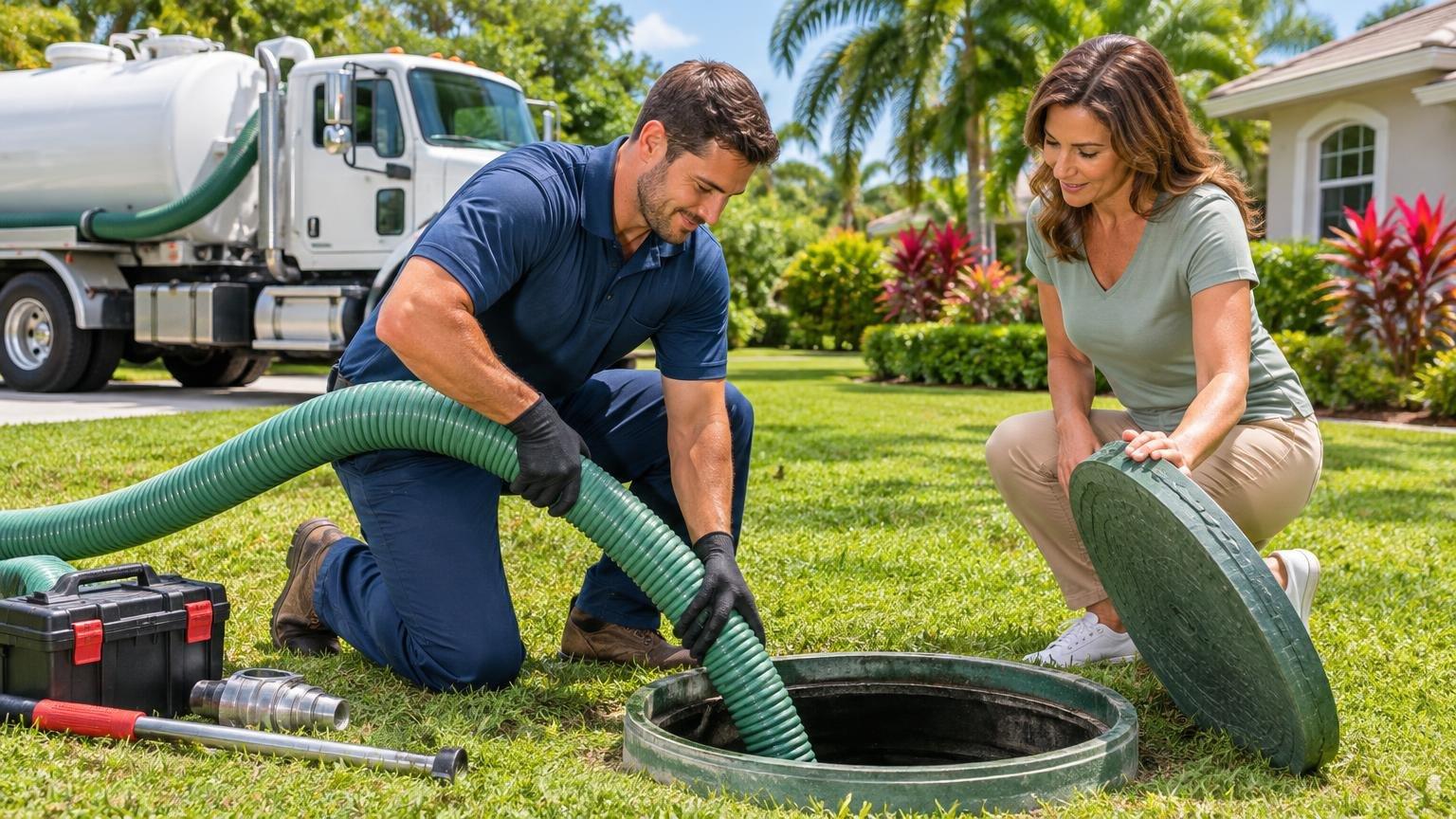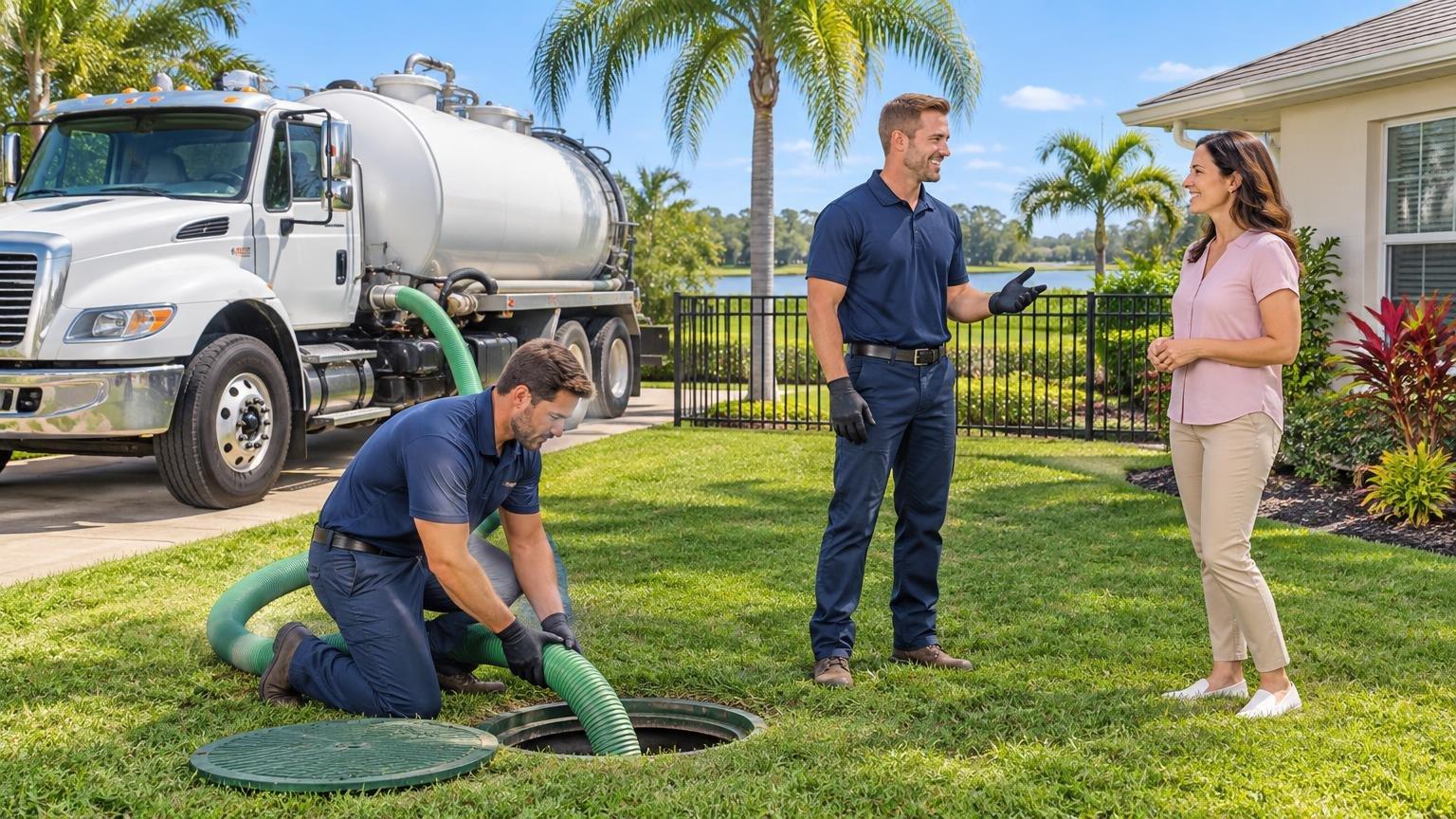
A septic service visit should leave you with answers, not more questions. When you schedule septic tank service in Clermont, we begin by learning what your system has been doing and why you called. From routine pumping to a possible repair concern, the goal is to understand your existing system and give you clear, practical guidance.
Fall is also a smart time to pay attention to septic performance after Central Florida's rainy season and before holiday guests bring extra water use into the home.
What a Professional Service Visit Looks Like
A typical visit starts with a conversation. We ask about recent changes, past service records when available, and where the tank lids or other known access points are located. This helps us arrive prepared and focus on the concern you are seeing.
Depending on your appointment, we may provide pumping, maintenance, an inspection of accessible components, repair evaluation, or recommendations for further work. Septic systems are not all the same, so we look at the condition of the existing system rather than assuming one solution fits every property.
During the visit, it helps to tell us if you have noticed:
- Slow drains, gurgling pipes, or backups
- Sewage odors inside or outside
- Wet spots or unusually lush grass near the system
- An ATU alarm or pump concern
- Heavy recent water use from guests, laundry, or plumbing changes
Small changes can provide useful clues. Sharing them early gives us a better picture of what may be happening below ground.
How Septic Tank Service in Clermont Unfolds
For a pumping appointment, we locate and access the tank, then check its contents and visible components. We remove accumulated solids and liquids as needed, while also looking for signs that may point to maintenance needs or a possible repair.
That process sounds simple, but the recommendations can vary quite a bit. Tank size, household occupancy, water habits, system type, maintenance history, and current symptoms all matter. A home with an aerobic treatment unit, for example, may need different attention than a conventional septic system.
After service is complete, we explain what we found in plain English. If everything appears to be working as expected, we may recommend a maintenance plan based on your property. If we see something that deserves more attention, we explain the next step and why it may be helpful.
Understanding What Your Technician Finds
A full tank does not automatically mean the entire system has failed. In many cases, pumping and regular maintenance are the right next steps. Still, a service visit can reveal concerns that should not be ignored.
Some findings we may discuss include:
- Damaged or missing baffles inside the tank
- Pump or alarm concerns with an ATU
- Drainage issues around the system
- Signs that the drainfield needs further evaluation
- Plumbing or sewer line symptoms that may need separate diagnosis
Our job is to help you understand the difference between routine maintenance, a targeted repair, and a larger system concern. If the drainfield or another part of the system needs more evaluation, that does not automatically mean replacement is the answer. We look at the existing conditions, your property requirements, and the option that makes the most sense for the long term.
Septic tank service in Clermont can also catch changes before they turn into a disruptive backup or property damage. If your system begins acting differently, it is better to share that information before the problem becomes urgent.
Choosing the Right System When Sewer Is Unavailable
When a property needs a new or replacement wastewater system, the first question is whether public sewer is available. In Florida, a residential property must connect when sewer touches the property. A commercial property must connect when sewer is within 500 feet.
Septic, ATU, and nitrogen-reducing systems are options only when public sewer is unavailable. A private septic system can help owners avoid recurring monthly city sewer fees, but it still needs professional maintenance to stay on track.
Once sewer availability is confirmed, we look at BMAP status. Properties in applicable BMAP areas require an ATU when public sewer is unavailable. For non-BMAP properties, a conventional septic system or an ATU may be appropriate. An ATU can also be considered when a smaller drainfield footprint may help with limited available space.
After that, available drainfield space helps guide the system design and selection. Following that order, sewer availability first, BMAP status second, and drainfield space third, helps keep the decision clear and based on the property's actual needs.
Keeping Your System Ready for Fall
Fall maintenance gives you a chance to address concerns after months of heavy rainfall and before holiday gatherings add more showers, laundry, dishes, and toilet flushing to the household routine. Spreading out heavy water use when possible can reduce strain on the system.
Good daily habits also protect the system between professional visits. Keep wipes, grease, paper towels, feminine hygiene products, and other non-septic-safe materials out of toilets and drains. If you notice odors, alarms, backups, wet areas, or unusually slow drains, do not wait for a complete failure before getting professional help.
Properties connected to public sewer can need attention, too. Sewer line cleaning and camera inspections can help identify blockages, breaks, root intrusion, and other line concerns. Whether your property has septic or city sewer, paying attention to early warning signs can help you make informed decisions before a small concern grows.
Get Clear Guidance for Your Septic System
For dependable septic tank service in Clermont, our team can help you understand the right next step for your property. Anytime Septic provides experienced guidance for maintenance, repairs, inspections, and system installations. If you have questions about your system or need to schedule service, contact us today.
FAQs
How Long Does A Septic Service Visit Take?
Service time depends on the appointment type, tank size, access to the system, and whether we find concerns that need more evaluation. After reviewing your service needs, we can provide a clearer timeframe.
How Often Should I Schedule Septic Pumping?
Pumping frequency depends on tank size, household size, water use, system type, and maintenance history. We recommend a schedule based on your specific property instead of using the same timeline for every system.
What Are Signs That I Should Call For Septic Service?
Slow drains, gurgling plumbing, sewage odors, wet areas near the system, backups, unusually lush grass, and ATU alarms are all reasons to have the system checked.
Do BMAP Properties Require An ATU?
Yes. When public sewer is unavailable, properties located in applicable BMAP areas are required to use an ATU. We can help explain how local requirements apply to an existing or replacement system.
Can Anytime Septic Help If My Property Uses City Sewer?
Yes. We provide sewer line cleaning and camera inspections for homes and businesses connected to public sewer. These services can help identify blockages, root intrusion, breaks, and other sewer line concerns.