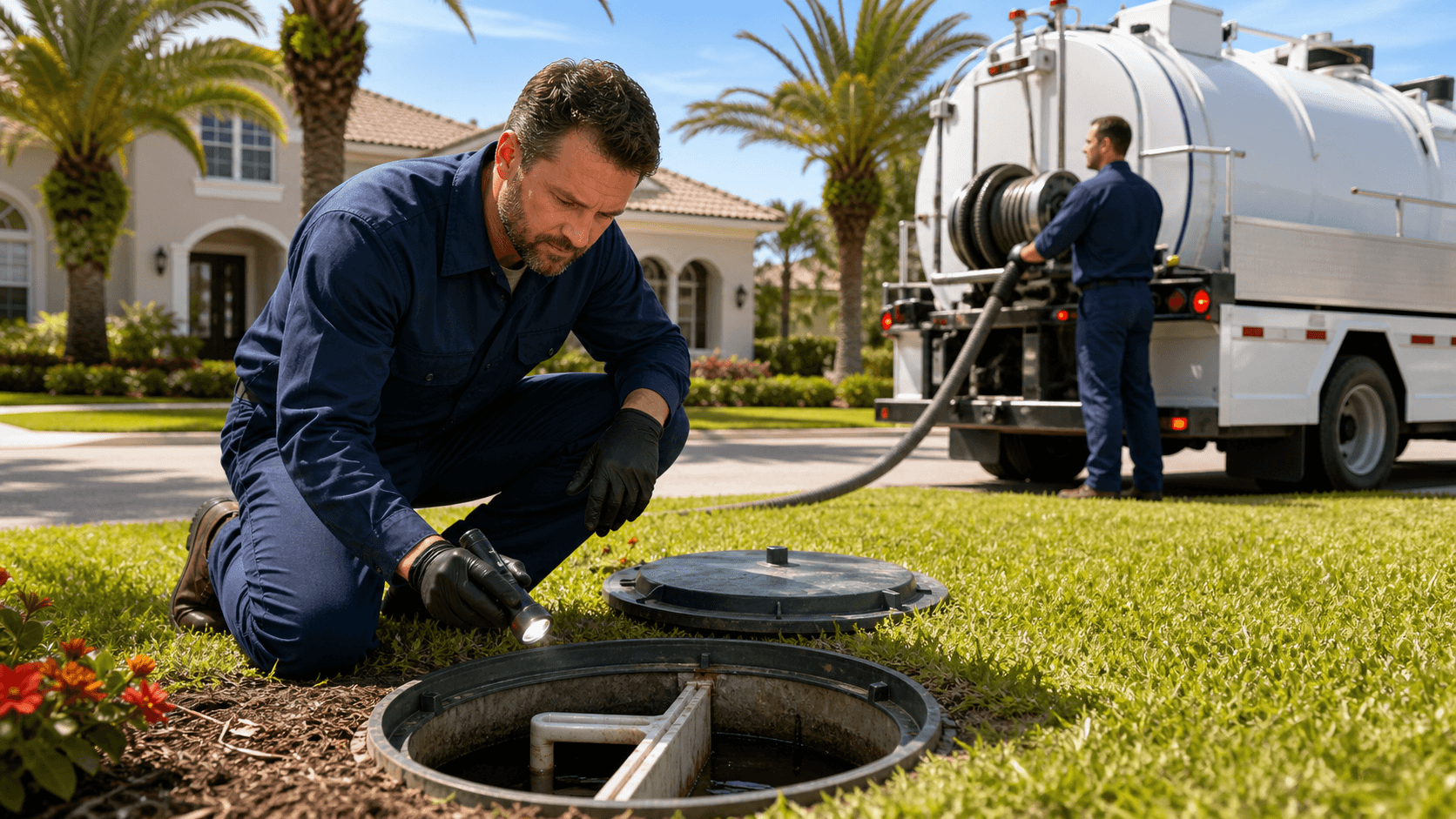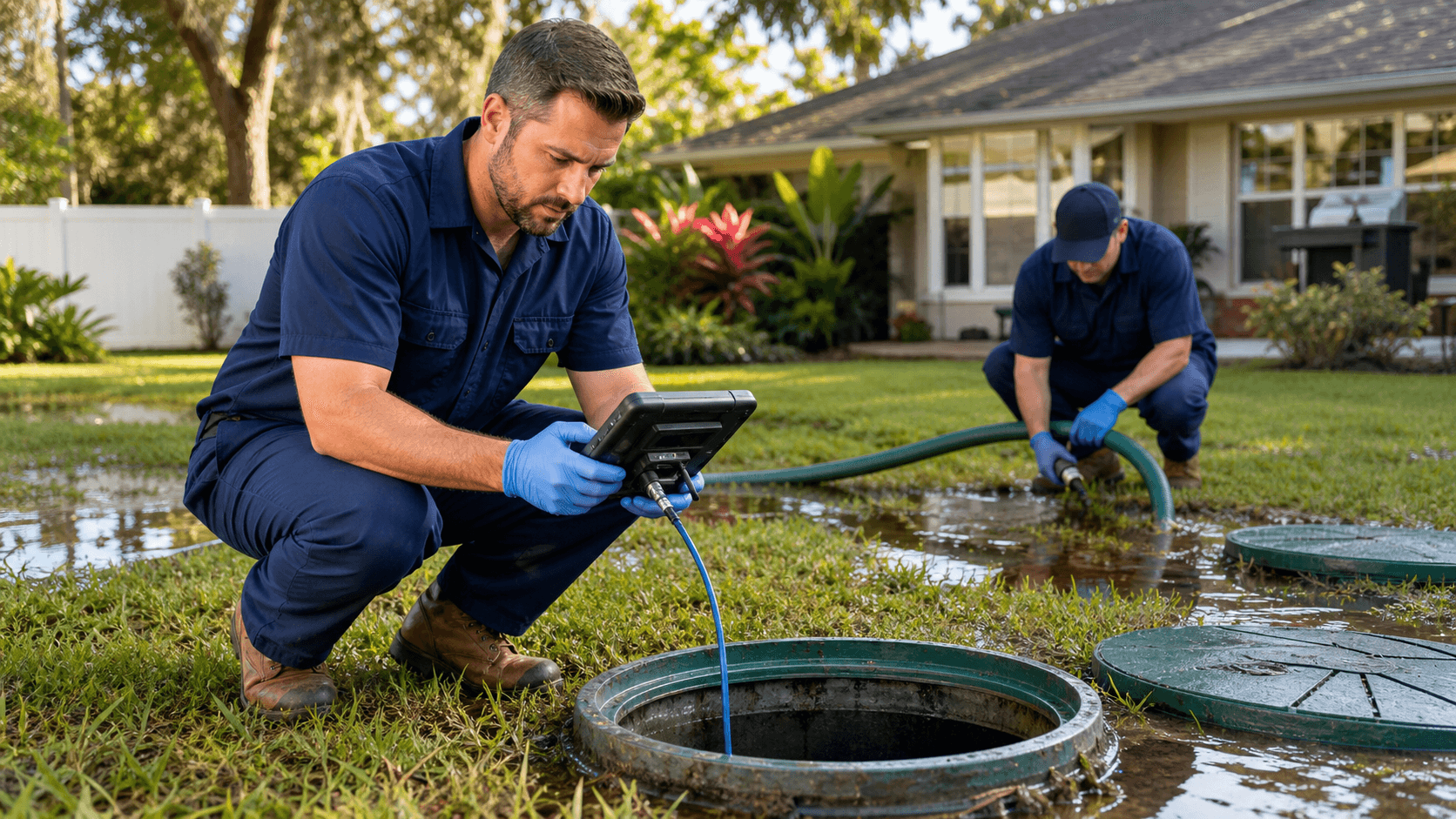
Late-summer storms can leave Casselberry properties with standing water, saturated soil, and runoff long after the rain stops. Those conditions can affect septic tanks, drainfields, pump systems, and aerobic treatment units (ATUs), even when everything seemed fine before the storm.
A septic inspection in Casselberry is a smart precaution if floodwater reached your septic area, your plumbing is acting differently, or you are unsure how high groundwater rose. Flooding does not automatically mean your system needs major repairs, but an inspection can show whether it is working normally, needs monitoring, or needs service before a backup occurs.
Flood Clues That Need Attention
Floodwater can saturate the drainfield, which makes it harder for treated wastewater to move through the soil. The tank itself may not be damaged, yet your home or business can still develop drainage trouble because the surrounding ground cannot accept water as usual.
We recommend prompt professional service if you notice:
- Slow drains throughout the property
- Toilets that gurgle or flush poorly
- Sewage odors indoors or near the septic area
- Wastewater backing up into sinks, tubs, or toilets
- Wet ground near the drainfield or an alarm on an ATU or pump system
Until conditions improve and we can inspect the system, conserve water as much as possible. Avoid large laundry loads, long showers, and other high-water activities that can add pressure to an already saturated drainfield. Please do not open septic lids or attempt repairs yourself, since flooded septic areas can be unsafe.
What We Check After Flooding
A flood inspection is more than a quick look at the tank. We assess the parts of the system that may have been affected by high water, storm runoff, or interrupted power.
Depending on your system, a technician may check the tank condition, risers and lids, inlet and outlet components, filters, pumps, alarms, electrical controls, and visible signs of drainfield saturation. This gives us a clearer picture of whether the issue is related to flooding, overdue maintenance, or another system concern.
Pumping is not always the first step after flooding. When groundwater remains high, pumping at the wrong time may not solve a drainage issue. We first determine whether pumping is appropriate and whether the system can safely return to normal operation.
ATUs and nitrogen-reducing systems deserve extra attention after a storm. Because they rely on mechanical and electrical components, a power interruption or alarm can point to a problem with the aerator, pump, controls, or water level. Testing those parts helps us identify what needs service.
Protect Your System While Water Recedes
Small choices while the ground dries can help reduce strain on your septic system. The goal is to limit extra wastewater and avoid disturbing soft, saturated ground around the tank and drainfield.
While waiting for conditions to improve, we suggest that you:
- Spread out laundry instead of running several loads at once
- Fix running toilets quickly to prevent needless water use
- Keep vehicles and heavy equipment off the septic and drainfield area
- Keep septic lids closed and avoid walking through flooded areas
- Note standing water, alarms, odors, and indoor drainage problems
Soft ground can shift or become unstable after heavy rain. Keeping people, vehicles, and equipment away from the septic area helps prevent damage to lids, pipes, and other components.
Photos and notes can also be helpful. If you observed an ATU alarm, standing water over the drainfield, or a sudden plumbing backup, that information helps us evaluate what happened and what the system needs next.
When Sewer or ATU Options Apply
A well-maintained private septic system provides on-site wastewater treatment and can help you avoid recurring municipal sewer fees when public sewer is unavailable. It still needs regular pumping, inspections, and maintenance to keep working as intended.
Florida properties must connect to available public sewer when sewer touches a residential property or is within 500 feet of a commercial property. Where sewer is unavailable, septic systems, ATUs, and nitrogen-reducing systems may be appropriate options.
Some Central Florida properties in BMAP areas may need an ATU or nitrogen-reducing system when local requirements apply. During a septic inspection in Casselberry, we can identify the type of system already in place and determine whether further evaluation of current requirements is needed.
Not every drainage problem belongs to a septic system. For homes and businesses connected to public sewer, we also provide sewer line cleaning and camera inspections when flooding is followed by slow drains, backups, or sewer odors.
Clear Answers Before Problems Grow
Flooding can reveal problems that were already developing, but it does not always mean your septic system has failed. A professional inspection gives you a practical answer about whether the system is recovering normally, needs observation, or needs service.
Understanding how saturated soil, groundwater, and electrical components affect a septic system can help you respond appropriately after a storm. Monitoring drainage, alarms, odors, and standing water as conditions improve provides useful information about whether the system is returning to normal operation.
Get Clear Answers About Your Septic System
If flooding has raised concerns about your system, our team can help determine whether professional evaluation is needed. Request a septic inspection in Casselberry to check key components and identify potential concerns early. Anytime Septic provides practical guidance based on your property's system and condition. To discuss your situation, contact us today.
Casselberry Flooding Inspection Questions
Should I Get A Septic Inspection After Flooding If My Drains Still Work?
If floodwater reached your septic tank or drainfield area, an inspection can help confirm that the system is operating properly and identify concerns before drainage problems or backups develop.
Can I Have My Septic Tank Pumped Immediately After Flooding?
Not always. High groundwater and saturated soil can affect the timing and safety of pumping. We assess the system first and recommend the appropriate service. Pumping the tank if the yard is full of water can cause the septic tank to float which would lead to more costly repairs.
What Should I Do If My Alarm Goes Off After A Storm?
An alarm may point to an issue with the aerator, pump, electrical controls, or water level. A professional inspection should be arranged as soon as possible.
How Long Should I Limit Water Use After Flooding?
Conserve water until standing water has receded and the septic system is functioning normally. Avoid high-water activities that may overload a saturated drainfield.
Do Homes Connected To City Sewer Need A Septic Inspection?
No. Public sewer connections do not have septic systems to inspect. Slow drains, backups, or sewer odors after flooding may instead point to a sewer line issue that needs cleaning or a camera inspection.