Finding the Source of Septic Odors in Casselberry
Recurring septic odors are not something to cover up with air fresheners or ignore. If you notice a sewage-like smell around your Casselberry property, we recommend having the system evaluated before a small issue turns into a larger repair.
Odors can come from plumbing vents, the septic tank, drainfield, ATU components, or even a sewer line. They may stand out more after heavy rain, high humidity, or increased household water use. We inspect conventional septic systems, ATUs, nitrogen-reducing systems, and sewer lines to help identify the real source.
Outdoor odors near a tank or drainfield can point to a tank that needs pumping, a damaged lid, wastewater surfacing, or a drainfield concern. Indoor odors may come from a dry plumbing trap, venting issue, backup, or another plumbing problem instead of the tank itself.
A septic inspection in Casselberry is especially important when odors:
- Get stronger after flushing toilets or running water
- Occur with slow drains or sewage backups
- Appear near wet spots or unusually green grass
- Continue for more than a short time
- Develop after heavy rain or saturated soil
Commercial properties can have similar concerns. High water use, restroom activity, grease, or a system that no longer fits the property's needs can all contribute to odor problems.
What We Check During an Inspection
The first step is listening to what you have noticed. We ask where the odor occurs, when it is strongest, when the tank was last pumped, whether water use has changed, and whether there are drainage concerns around the property.
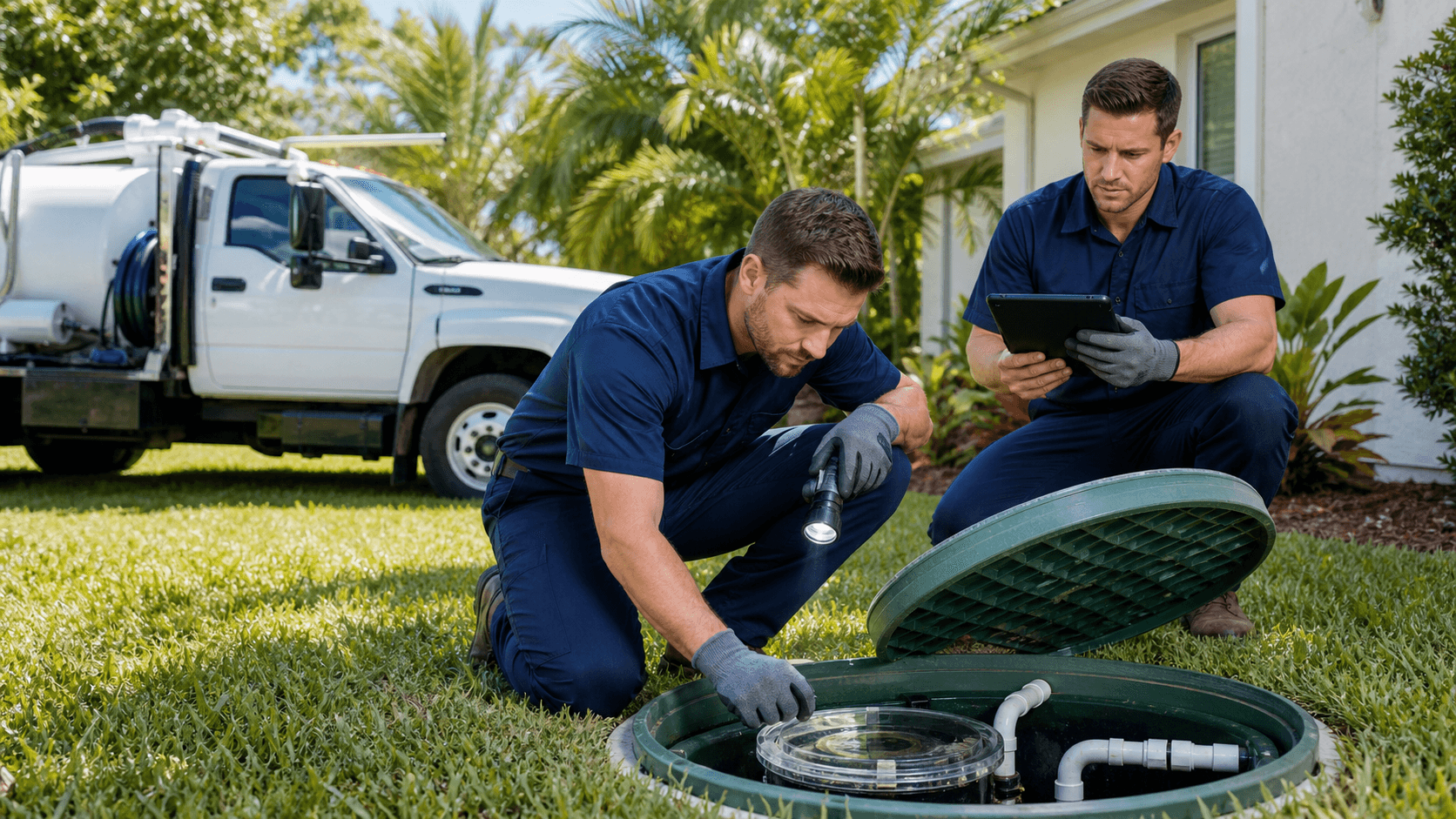
From there, we evaluate accessible system components. Depending on the property, this may include the tank condition, inlet and outlet areas, filters, pumps, alarms, and visible drainfield conditions. The goal is to determine whether the odor is tied to routine maintenance, a damaged part, a wastewater issue, or another concern.
An inspection can point toward the right next step, such as:
- Pumping an overly full tank, or one that has not been serviced in a while
- Cleaning a blocked filter
- Repairing or replacing a damaged outlet device or pump
- Maintaining ATU components
- Performing added diagnostic work for a drainfield concern
Not every odor means the septic system has failed. Still, a recurring smell is a sign that something deserves professional attention. For homes and businesses connected to public sewer, we can also inspect sewer lines with cleaning and camera services to locate blockages, cracks, root intrusion, or other line problems.
ATU Systems, BMAP Areas, and Sewer Availability
Aerobic Treatment Units, often called ATUs, treat wastewater more thoroughly than a conventional septic system. Because they include added mechanical components, they need regular professional maintenance. Pumps, alarms, filters, and aeration equipment can all affect how the system performs and whether odors develop.
Nitrogen-reducing systems are also important in BMAP areas throughout Central Florida. When planning a septic installation or upgrade where public sewer is unavailable, the decision sequence matters. First, we confirm sewer availability. Florida properties must connect to available sewer when it touches a residential property or is within 500 feet of a commercial property.
Where sewer is not available, we determine whether the property is in a BMAP area. BMAP properties require an ATU. Non-BMAP properties may use a conventional system or an ATU, including an ATU when reducing the drainfield footprint is helpful. Drainfield space and final system selection come after those first two steps.
If an ATU alarm sounds or an odor develops, it is wise to have the system checked promptly. Ignoring alarms or missed maintenance can allow a manageable issue to become more disruptive.
Keeping Odors From Returning After Service
The right follow-up depends on what we find during the inspection. One property may need regular pumping, while another needs ATU service, filter cleaning, pump repair, sewer line cleaning, or a targeted septic repair. We consider household size, water use, system type, and property conditions when recommending maintenance.
A few everyday habits can also protect your system:
- Keep wipes, paper towels, and hygiene products out of toilets
- Avoid pouring grease into sinks or drains
Scrape plates, bowls and cookware into the trash instead of using the disposal
- Repair leaking toilets and faucets promptly
- Keep vehicles and heavy equipment off tanks and drainfields
- Avoid planting deep-rooted bushes and trees near septic components
October can reveal problems that were harder to notice during drier parts of the year. After months of summer rain and hurricane-season weather, saturated soil, standing water, and new odors may point to a maintenance need or a larger drainfield concern. A septic inspection in Casselberry can help separate a weather-related warning sign from a system issue that needs repair.
When Persistent Odors Need Prompt Attention
Odors deserve prompt attention when they appear with slow drains, wet yard areas, backups, alarms, or noticeable changes around the drainfield. Waiting can allow wastewater and drainage problems to become harder to manage.
The most useful takeaway is simple: pay attention to where the odor occurs and what else is changing. Those details help a professional determine whether the issue involves plumbing, the septic tank, an ATU, the drainfield, or a sewer line.
Get Clear Answers for Your Septic System
A septic inspection in Casselberry can help identify the condition of your system and clarify what service may be needed. Our team at Anytime Septic provides practical guidance for homeowners and business owners. If you have questions or would like to schedule service, contact us today.
FAQs
How Do I Know If The Odor Is Coming From My Septic System?
A septic-related odor may be stronger near the tank, drainfield, plumbing vents, or outdoor wet areas. Slow drains, backups, unusually green grass, and standing water can also point to a septic concern. An inspection helps identify the actual source.
Can A Full Septic Tank Cause A Sewage Smell Outside?
Yes. A tank that is overdue for pumping can contribute to outside odors, especially when wastewater levels are high. However, damaged components, drainfield concerns, vent problems, and ATU maintenance needs can also cause similar smells.
Why Does My Septic System Smell Worse After Heavy Rain?
Heavy rain can saturate soil around the drainfield and make it harder for wastewater to disperse normally. Rain may also reveal drainage, tank, or drainfield concerns that were less noticeable when conditions were drier.
Do ATU Systems Need More Maintenance Than Conventional Septic Systems?
Yes. ATUs have added treatment components, including pumps, alarms, filters, and aeration equipment. Routine professional maintenance helps keep those parts operating properly and may help prevent odors and unexpected failures.
Can Sewer Lines Be Inspected For Homes On Public Sewer?
Yes. Sewer line cleaning and camera inspections can help locate blockages, root intrusion, damaged piping, and other line concerns that may cause recurring sewer odors.