Get Clear Answers Before Problems Grow
A professional septic inspection helps you understand what is happening below ground before a small concern turns into a backup, drainfield trouble, or a disruptive repair. Septic systems can work quietly for years, so problems are not always easy to spot from inside the house or business.
Anytime Septic provides septic inspections for residential and commercial properties with existing systems in Orlando and Central Florida. A septic tank inspection checklist helps us review the tank, wastewater levels, drainfield performance, mechanical parts, and any recommended next steps.
What a Septic Tank Inspection Checklist Covers
An inspection gives us a consistent way to review the accessible parts of your septic system. We may recommend an inspection during a real estate transaction, before you purchase a property with an existing system, after recurring plumbing concerns, or as part of routine care.
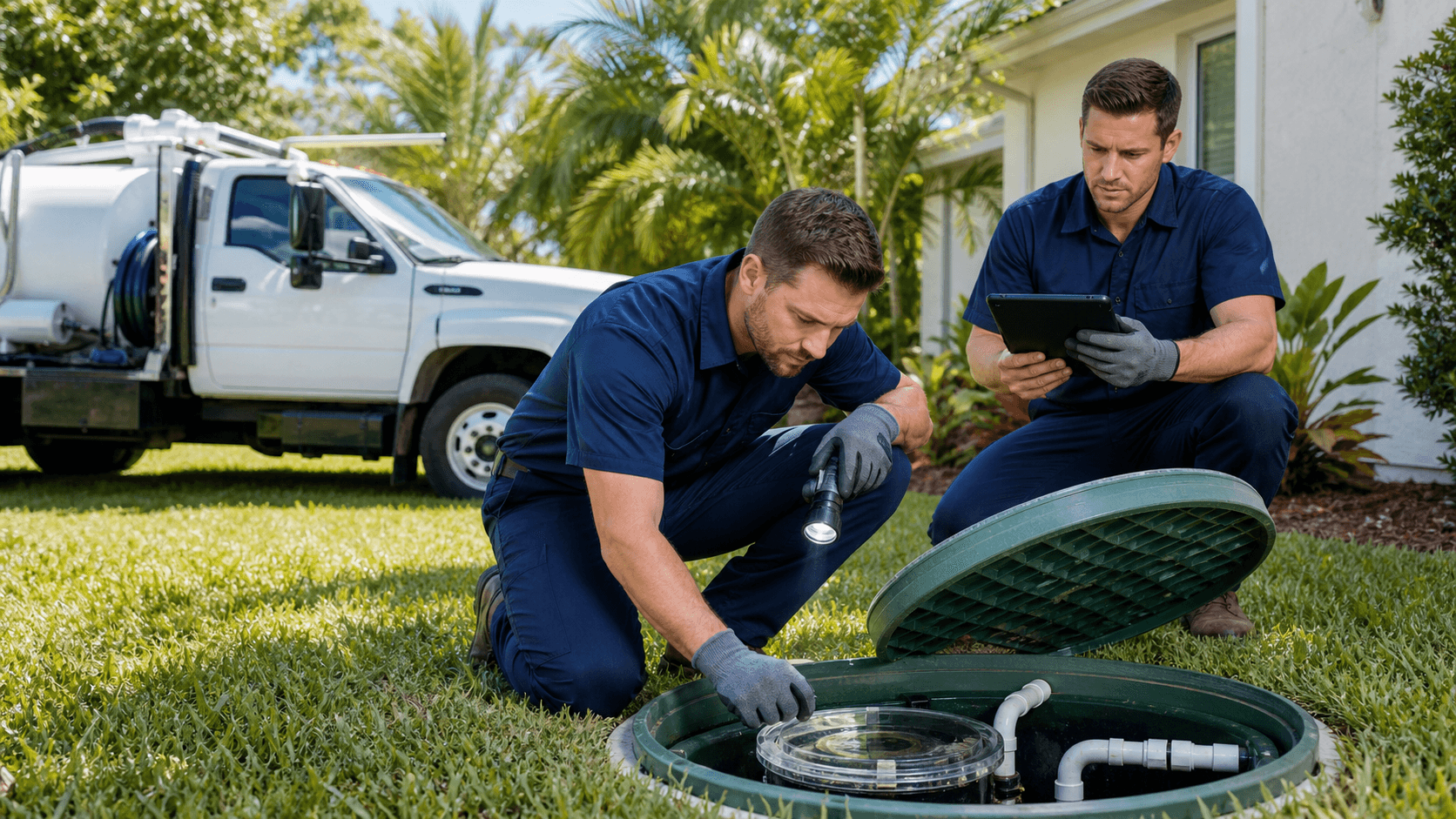
Early in the visit, we identify the tank location, review accessible lids or risers, and check the surrounding site. Standing water, sewage odors, damaged covers, and signs of backups can all provide useful clues about system performance.
Pumping and inspection are related, but they are not the same service. Pumping removes accumulated solids. An inspection evaluates the condition of accessible components and looks for signs of wear or malfunction. If sludge and scum levels are high, we may recommend pumping to protect the system and allow a clearer tank evaluation.
Inside the Tank and Drainfield
Once the tank is accessible, we check wastewater, sludge, and scum levels. Too much buildup can reduce the tank's ability to separate solids from wastewater. That can allow material to move toward the drainfield, where it may create bigger concerns.
We also inspect accessible inlet and outlet baffles or tees. These parts guide wastewater through the tank and help keep floating solids from leaving too soon. Damaged or missing outlet baffles may need repair to help protect the drainfield.
A typical septic tank inspection checklist may include:
- Visible cracks, corrosion, leaks, or deteriorated concrete
- Damaged lids, risers, or unsafe access points
- Inlet and outlet component condition
- Sludge and scum levels
- Signs of stress around the drainfield area
The drainfield is where treated wastewater leaves the tank and moves into the soil. Wet or unusually green grass, sewage odors, slow drains, plumbing backups, or wastewater surfacing in the yard can point to a concern. In October, heavy rain, saturated soil, and recent storms can make drainage problems easier to notice. Tell us about any seasonal odors, wet spots, or backups you have seen.
When Maintenance or Repairs Are Recommended
Inspection findings often reveal maintenance needs before they become emergencies. Depending on what we observe, the next step could include pumping, replacing a damaged baffle, repairing a riser or lid, servicing a pump, or addressing an alarm issue.
ATUs, also called Aerobic Treatment Units, need regular professional service because they use mechanical equipment to treat wastewater. During an ATU inspection, we may check accessible equipment such as:
- Aerators and pumps
- Floats and alarms
- Control panels and electrical controls
- Treatment components
- Spray equipment, when applicable
Clear written recommendations matter. Your report should explain what was observed, what should be monitored, what work is recommended, and how soon it should be addressed. Keeping records of pumping, repairs, ATU service, and past inspections gives us a better picture of your system over time.
Choosing the Right System Path
When an existing system needs major replacement, or a property needs a wastewater solution, sewer availability comes first. In Florida, residential properties must connect when available public sewer touches the property, while commercial properties must connect when it is within 500 feet.
If sewer is unavailable, the next question is whether the property is in a Basin Management Action Plan area, often called a BMAP area. Properties in applicable BMAP areas require an ATU. Where sewer is unavailable and the property is not in a BMAP area, a conventional septic system or an ATU may be an option based on permitting requirements and site conditions.
Know What Your System Needs Next
A thorough septic tank inspection checklist helps us identify concerns early and explain practical options for your property. Anytime Septic provides clear findings and experienced guidance for ongoing maintenance, repairs, and system decisions. If you have questions about your septic system, contact us to speak with our team.
Common Septic Inspection Questions
How Often Should A Septic Tank Be Inspected?
Most systems benefit from regular professional inspections, especially when the pumping schedule, repair history, or system condition is unknown. The right timing depends on household size, tank size, water use, and whether your system has an ATU or other mechanical components. ATU systems require 2 to 4 inspections each year.
Does A Septic Inspection Include Pumping The Tank?
Not always if it's been less than a year since the tank was pumped. An inspection evaluates accessible system components and looks for signs of wear or malfunction. Pumping may be recommended when solids levels are high, if it's been more than a year since the tank was pumped or when the tank needs to be emptied for a more complete evaluation.
What Are Common Signs That A Septic System Needs Inspection?
Slow drains, sewage odors, plumbing backups, wet areas near the drainfield, unusually green grass, gurgling fixtures, and ATU alarms are all reasons to have the system professionally inspected.
What Does An ATU Inspector Check?
An ATU inspection may include accessible aerators, pumps, floats, alarms, electrical controls, treatment components, and spray equipment when applicable. Regular service is important because these systems depend on mechanical parts to operate properly.
Do BMAP Properties Need An ATU In Central Florida?
When sewer is unavailable, properties in applicable BMAP areas require an ATU. A professional evaluation can help confirm local requirements, review available drainfield space, and identify the appropriate permitted system option.