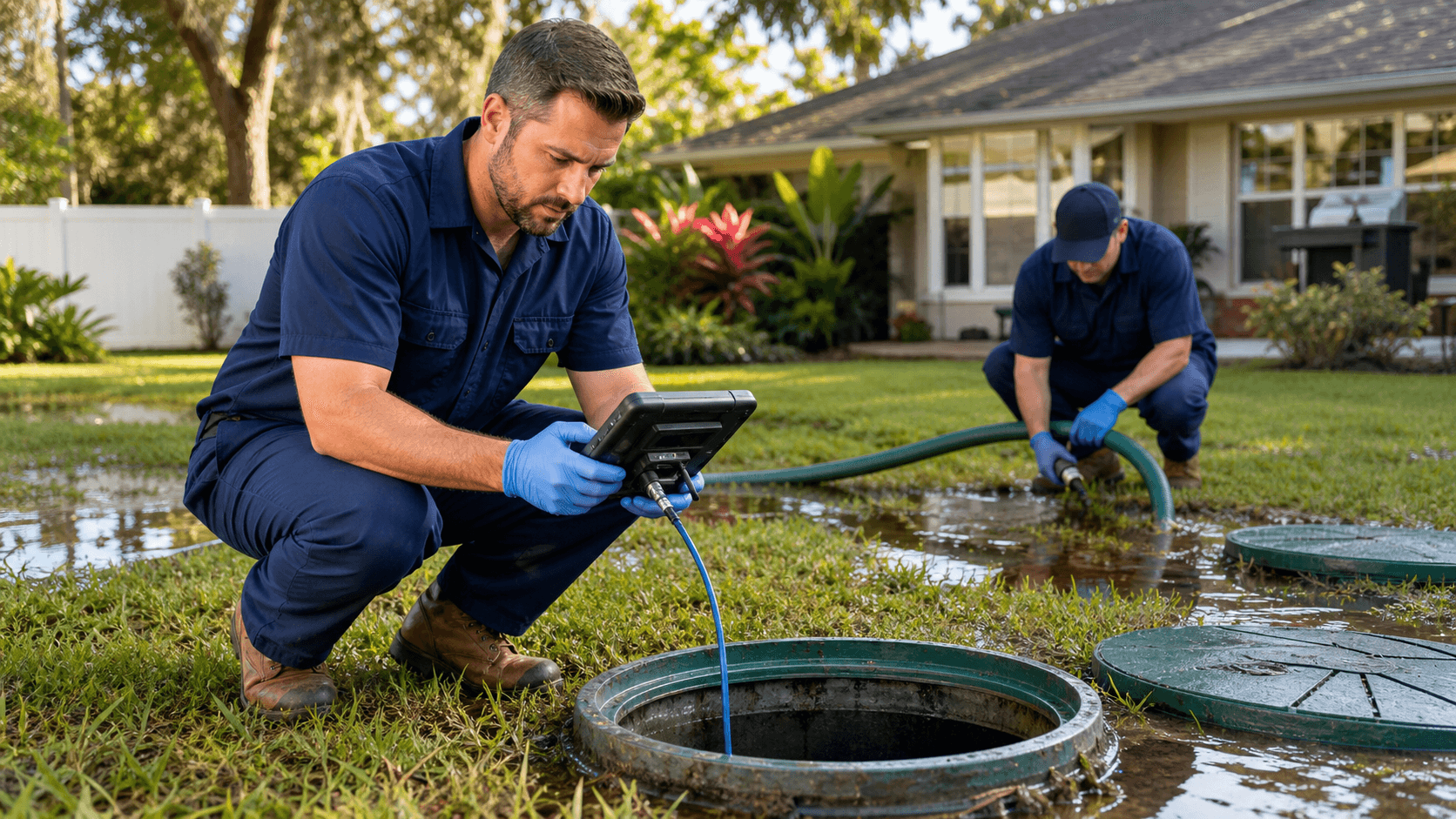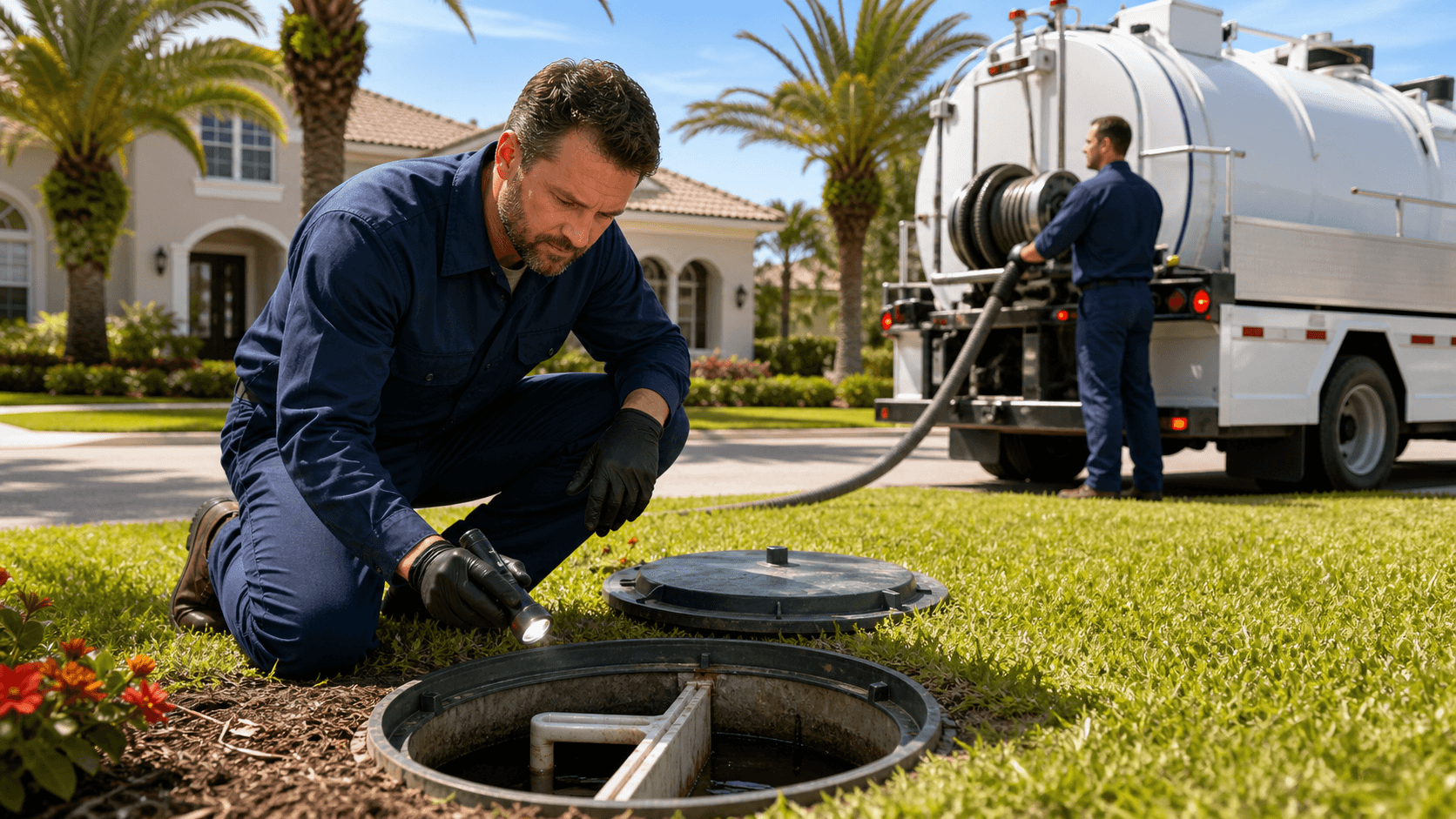
A Pumping Visit Reveals More Than a Full Tank
Septic tank pumping services do more than remove waste. During a pumping visit, we can observe tank conditions, internal parts, and warning signs that may affect the drainfield or other areas of your system.
September's heavy rain and saturated soil in Central Florida can make slow drains, standing water, and drainfield concerns easier to notice. Pumping can catch maintenance needs early, although some findings may need a follow-up inspection, camera inspection, repair, or ATU service.
Before pumping begins, we check the liquid level inside the tank. It is usually near the outlet pipe. A level that is unusually high or low can point to an outlet blockage, plumbing leak, drainfield concern, or another issue worth evaluating.
We also look at the layers inside the tank:
- The scum layer, made of floating materials
- The sludge layer, made of settled solids
- The wastewater between those layers
Heavy buildup may mean pumping has been delayed, a live bacteria product may be needed or that water use is putting extra strain on the system. Tank size, household size, business activity, garbage disposal use, water use, and system design all affect how often service is needed. We recommend following a schedule based on your specific system instead of waiting for a backup.
Baffles, Filters, and Drainfield Clues
Inside the tank, inlet and outlet baffles guide wastewater in the right direction. They help keep floating solids from leaving the tank too soon. If a baffle is damaged, missing, or deteriorating, solids can move toward the drainfield, where they can create bigger problems.
An effluent filter, when your system has one, adds another layer of protection. It catches solids before they leave the tank. A clogged filter may contribute to slow drains or backups, so cleaning it during pumping can help protect the drainfield.
Accessible components may also tell us a lot about your system's condition, including:
- Tank lids, risers, and seals
- Effluent filters and baffles
- Pumps, alarms, and electrical connections
- Signs of wear around accessible equipment
Pumping removes material from the tank, but it does not repair a failing drainfield. If wastewater cannot move properly into the soil, the tank can refill quickly or show a higher-than-normal liquid level. We may connect the following signs to a possible drainfield concern:
- Wet areas near the drainfield
- Sewage odors outdoors
- Gurgling drains or plumbing backups
- Unusually green grass over one area
Pumping more frequently than yearly
These signs do not always point to one single problem. Additional inspections may be needed to inspect distribution components, pumps, or other parts of the system.
ATU Maintenance and Local Requirements
Aerobic Treatment Units, often called ATUs, use mechanical parts to provide added wastewater treatment. Nitrogen-reducing systems may be required in certain Central Florida BMAP areas where public sewer is unavailable.
An upgrade may be required when a local or state requirement, permit condition, repair project, replacement project, or program requirement applies to your property. Because every location and system can be different, we evaluate the equipment and maintenance needs based on the system in place.
During ATU maintenance or pumping, we may review alarms, aerators, pumps, control panels, treatment components, and service records. Regular maintenance helps identify trouble before a small equipment concern becomes a system failure.
Knowing When More Evaluation Is Needed
A pumping appointment gives you a useful look inside a system that usually stays out of sight. When we find high tank levels, damaged components, recurring backups, or drainfield warning signs, the next step may be an inspection, repair, camera inspection, or ATU service.
Properties connected to public sewer have different needs. Private septic systems can avoid recurring monthly sewer fees, but properties must connect to available sewer when it touches a residential property or is within 500 feet of a commercial property when the septic system is in failure. Septic, ATU, and nitrogen-reducing systems are options only where sewer is unavailable.
For homes and businesses on city sewer, sewer line cleaning and camera inspections can help identify clogs, root intrusion, breaks, and other pipe concerns. Whether your property uses septic or sewer, early diagnosis can help prevent a disruptive wastewater problem.
Keep Your Septic System On Track
If it is time to plan routine care, our septic tank pumping services can help protect your system's performance and support informed maintenance decisions. Anytime Septic provides experienced guidance for homeowners and businesses who want dependable septic care. Contact us to discuss your system and schedule service with our team.
Common Questions About Pumping Diagnostics
What Can A Technician Check During Septic Tank Pumping?
We can check tank levels, scum and sludge buildup, baffles, effluent filters, accessible tank components, and warning signs that may point to drainfield, plumbing, pump, or ATU concerns.
Will Pumping Fix A Septic Backup?
Pumping may provide temporary relief when a tank is overdue for service. It will not fix a clogged drainfield, damaged component, plumbing blockage, or another underlying problem, so further evaluation may be needed.
How Often Should A Septic Tank Be Pumped?
Most systems need pumping every one to three years, but some can go every three to five years. The right schedule depends on tank size, occupants, water use, business activity, and system type. We can recommend a maintenance schedule based on what we find.
Can A Pumping Visit Identify An ATU Problem?
ATU systems require regular visits determined by the permitting authority. During ATU maintenance inspections, we check alarms, aerators, pumps, electrical controls, treatment components, and service records. Some findings may require additional diagnostics or repair. These maintenance visits don't always require pumping the tank. The need for pumping these tanks is determined during the visits, and is based on the level of sludge in the tank.
What If My Property Is Connected To City Sewer?
We can inspect sewer lines with cleaning and camera services to identify blockages, roots, damaged pipes, and other concerns. A clear diagnosis helps determine the appropriate repair or maintenance step.