A Clear Path to Worry-Free Septic Installation
Hearing that your Kissimmee home needs a new drainfield or septic system can feel stressful. You might wonder how long it will take, what your yard will look like, and what you are supposed to do while the work is going on. It helps a lot to know the steps ahead of time so there are no surprises.
Here, Anytime Septic walks through what happens during septic installation in Kissimmee, from the first inspection to the final hookup. We will talk about warning signs that a new system may be needed, how the installation process works in our local soil and weather, and what you can expect afterward. With the right design and proper care, a new system can serve your home for many years, and local experts who know Florida rules and Osceola County requirements can make the whole process smoother.
How to Know Your Kissimmee Home Needs a New System
Before planning a new installation, it helps to know if your current system is really at the end of its life or if a repair might be enough.
Common signs that replacement may be needed include:
- Recurring backups in toilets or tubs
- Slow drains in several fixtures at the same time
- Sewage odors in the yard or near drains that return even after pumping
- Soggy or spongy areas over the drainfield
- Standing water or extra-thick, bright green grass in one strip of the yard
- Frequent emergency pumping or repairs every year
Sometimes, repairs are no longer the smart choice. Older tanks and drainfields usually have a practical life span. After many years of use, the drainfield soil can clog, or the tank can suffer damage that is not worth patching. At that point, a full system replacement is often safer and more reliable than constant fixes.
You may also need a larger or upgraded system when:
- You add bedrooms
- You convert a garage to living space
- You add a rental unit or expand a home office
In our area, some homes are inside what is called a Basin Management Action Plan, or BMAP, zone. In simple words, that is a mapped area near certain water bodies where the state wants to reduce extra nutrients getting into the ground and waterways. If you live in one of these areas, you may be required to install an ATU or nitrogen-reducing system instead of a standard tank when you replace or upgrade your system.
The only way to know for sure what you need is with a professional inspection and a permit check. Anytime Septic can review your system, your property, and the latest local rules to see whether repair is allowed, if a full septic installation in Kissimmee is required, and whether any upgrade rules apply to your property.
Step-by-Step Septic Installation in Kissimmee Homes
A good installation follows a clear set of steps so you know what is happening each day.
1. Site Evaluation and Design
During this visit, the Anytime Septic crew will:
- Review your home size and bedroom count
- Look at your plumbing layout and where the main pipe exits
- Check how the property slopes and where driveways, trees, and wells are located
- Do simple soil and water table checks
Kissimmee has a lot of sandy soil and a fairly high water table in many spots. That matters because the system has to keep treated wastewater far enough above the groundwater and away from wells and lakes. Based on soil, lot size, local rules, and whether you are in a BMAP area, we design the right type of system, whether that is a standard system, an ATU, or a nitrogen-reducing setup.
2. Permits, Scheduling, and Prep
In plain English, the permit is the county or state's written approval of the design. They usually want to see:
- A basic layout of the tank and drainfield
- Soil and water table information
- Bedroom count and house location on the lot
Once permits are in place, we set a realistic installation timeline. Around summer, that often means planning around afternoon storms and wet ground.
Homeowners can help by:
- Clearing access paths and moving movable items from the work area
- Planning where vehicles can park
- Deciding which parts of the yard should be avoided if possible
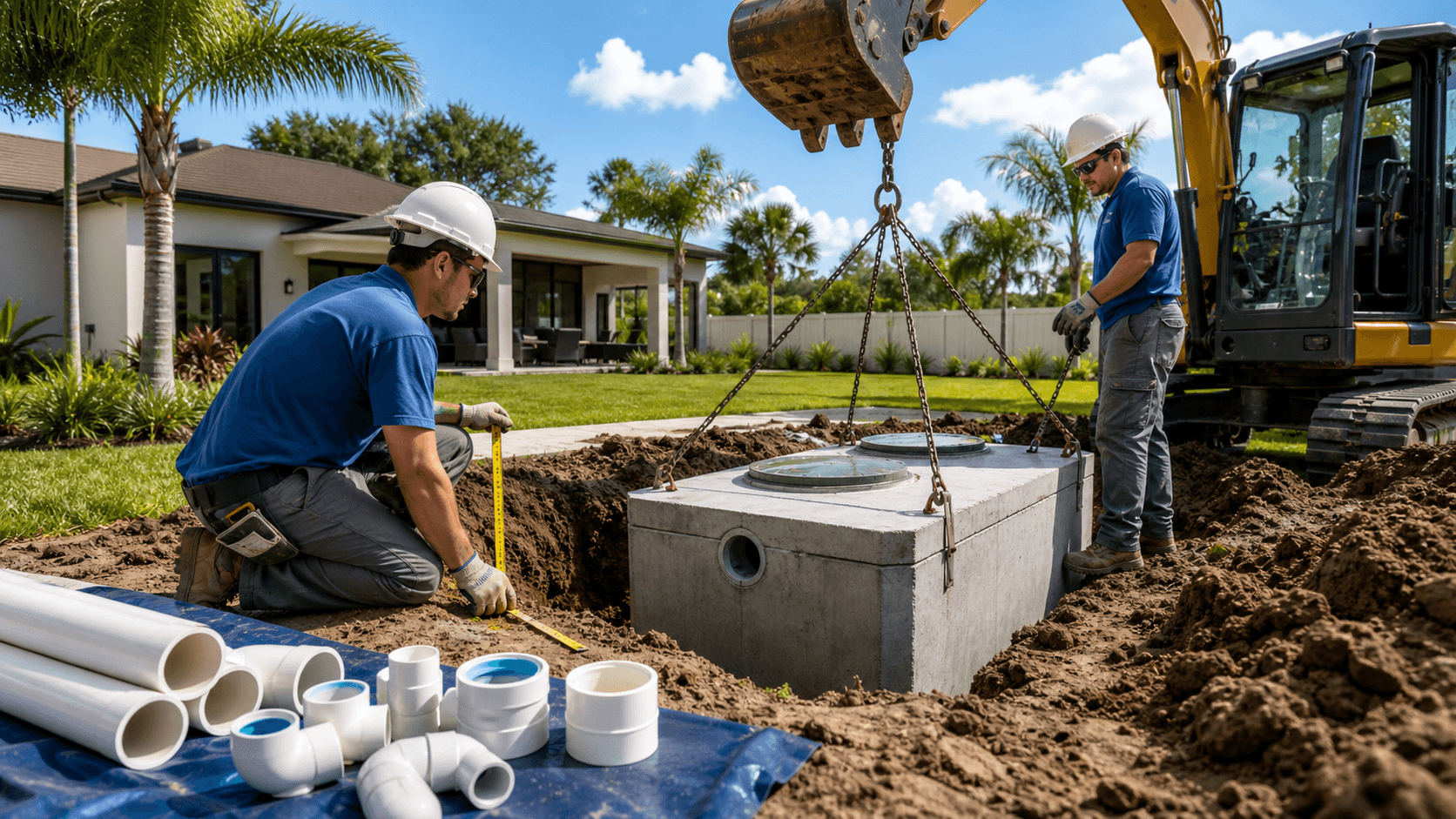
3. Installation Days
On installation days, you can expect:
- Excavation for the tank and/or drainfield or advanced treatment parts
- Setting the tank in place and leveling it
- Installing drainfield lines, chambers, or treatment components
- Connecting the system to the home's plumbing
Before everything is backfilled, we confirm everything is at the proper elevation with the proper fall for drainage. After final grading and cleanup, our team will walk you through the layout, show you any access lids, alarms, and control panels, and explain basic do's and don'ts.
Choosing Between Standard, ATU, and Nitrogen Systems
A standard septic system is the simple setup many people know. Wastewater flows from the home into the tank, heavier solids settle to the bottom, lighter material floats on top, and the clearer liquid in the middle flows out to the drainfield, where it filters through the soil. In most parts of the Kissimmee area, standard systems are still allowed and can be a reliable choice.
Pros of standard systems:
- Simple design and fewer mechanical parts
- Familiar maintenance like regular pump-outs and filter checks
Cons:
- No special nitrogen treatment, which may not meet rules in some BMAP areas
- Not always the best choice on very small or tricky lots
ATU systems, or aerobic treatment units, act more like a mini treatment plant for your home. They add air into the wastewater to help certain bacteria work harder. That extra treatment usually means cleaner water going out to the drainfield, which can be helpful on some sites or where there is less space.
Benefits of ATUs include:
- Cleaner effluent leaving the tank
- Better performance in some soils or limited-space lots
- Added protection for nearby lakes, ponds, and wetlands
ATUs require regular inspections, service on parts like pumps and air systems, operating permits, and routine pump-outs. This type of system also requires a maintenance agreement with a company authorized by the ATU system's manufacturer. Anytime Septic services and maintains several types of ATU systems throughout the Kissimmee area and can set up a schedule that keeps you in compliance with the county regulations and operating permit specifications..
Nitrogen-reducing systems go a step further. They are designed to further reduce the amount of nitrogen that reaches the soil. Some Kissimmee-area homes near sensitive water bodies, or inside certain BMAP zones, may be required to install this kind of system when building new, replacing a failed system, or adding bedrooms that increase wastewater flow.
Anytime Septic stays current on ATU and nitrogen-reducing system requirements in BMAP areas and can explain which type meets current rules while still fitting your long-term budget and property layout.
What to Expect After Installation
Once your new system is in, there is a short start-up period. In the first few weeks, it is normal to see some settling in the yard as the soil and grass adjust. You should see:
- Clearly marked or easy-to-find access lids
- A fairly level yard surface as grass fills in
- No sewage odors or standing water near the drainfield
Watch for unusual wet spots, repeated slow drains inside, or alarm lights or buzzers on ATU systems. If anything looks or feels off, it is better to ask questions early.
For long-term care, most homes need:
- Regular pumping based on household size and system type
- Periodic filter cleaning and inspections
- Careful daily habits like not flushing wipes, hygiene products, or grease
For all septic systems, spacing out laundry loads and large water uses can help protect the drainfield. Advanced systems, including ATU and nitrogen-reducing setups, usually require professional servicing on a set schedule to keep them working correctly and meeting code. Anytime Septic can set up routine maintenance visits so you do not have to guess about timing.
Kissimmee's rainy season and strong storms can put extra stress on any septic system. To help prevent overload:
- Keep roof and yard runoff directed away from the drainfield
- Make sure lids and risers are secure
- Watch for new wet areas after long rain events
Even homes on city sewer can feel the effects of heavy rain. In those cases, sewer line cleaning and camera inspections can help find issues like clogs, broken pipes, or roots in the line. Anytime Septic also provides sewer line cleaning and camera inspections for Kissimmee homes connected to city sewer.
Private Septic Versus City Sewer for Kissimmee Homes
Many local homeowners like private septic because it gives more control over long-term costs. There is no monthly sewer bill, and most expenses are tied to regular maintenance and occasional repairs or upgrades. A private system is also independent from city mains, so if there is a backup in a municipal line down the street, your home is usually not affected.
If the sewer line runs down your street, most local ordinances require homes to connect to sewer as it is considered available. A septic permit will not be allowed in this case.
Some homes will stay on private septic for the long term, while others may connect to sewer when required.
Because Anytime Septic works with both septic systems and sewer lines, we can help you understand your options, whether you are looking at repairs, new septic installation in Kissimmee, or tying into a city line.
Have Questions About Septic Installation in Kissimmee?
If you are seeing signs your system may be failing, or you have been told you need a new tank or drainfield, you do not have to figure it out alone. Call Anytime Septic for a professional inspection, clear explanations of your options, and expert septic installation in Kissimmee. Our team can also handle ongoing maintenance, ATU and nitrogen-reducing system service, repairs, and sewer line cleaning and camera inspections so your home's wastewater system keeps working the way it should.
Get Started With Your Project Today
If you are planning a new build or replacing an aging system, our team at Anytime Septic is ready to help you with reliable septic installation in Kissimmee tailored to your property. We will walk you through every step, from evaluation and permitting to final installation, so you know the work is done right. To schedule a consultation or request an estimate, simply contact us and we will follow up promptly.