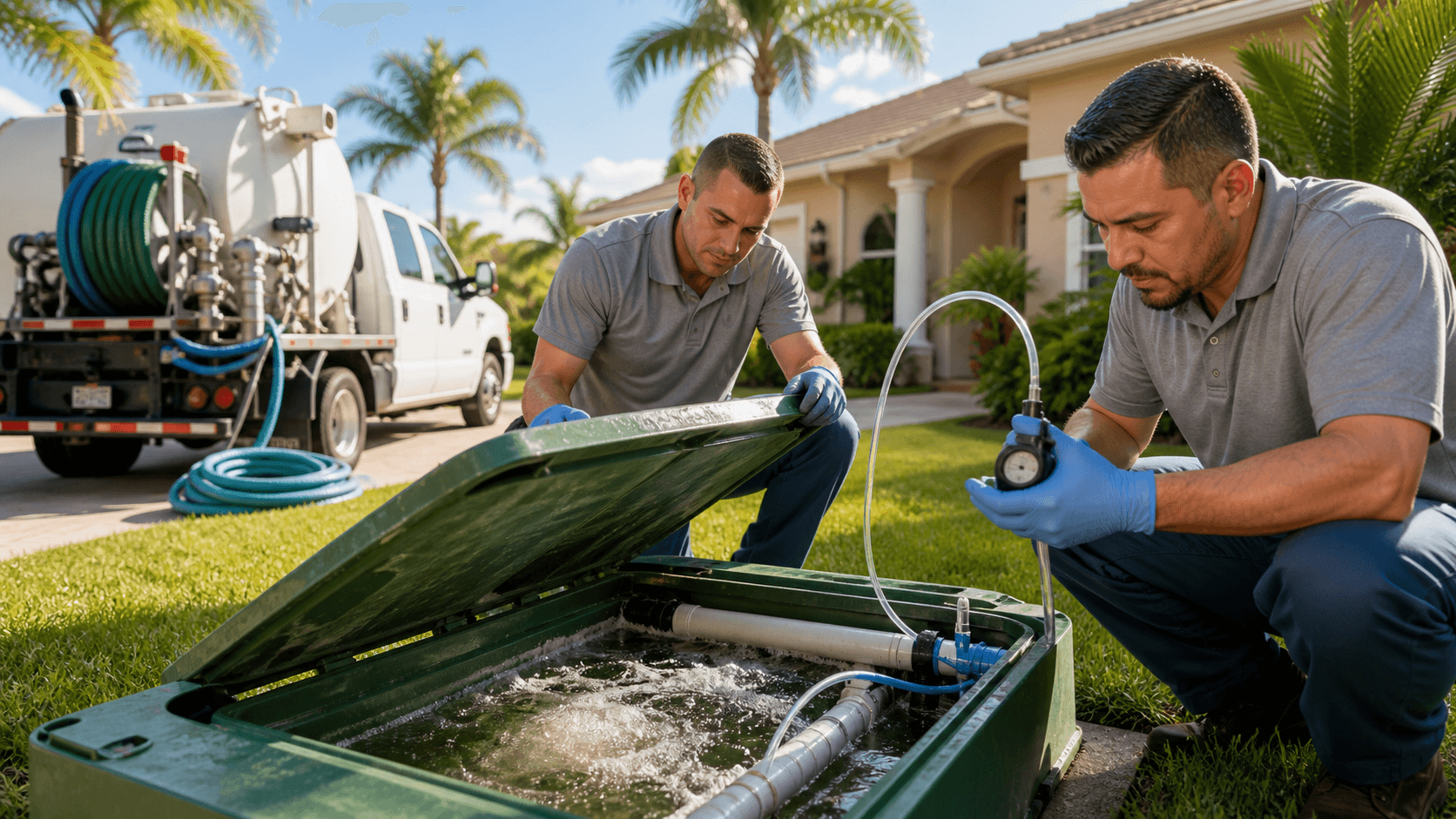
Protect Your Orlando Property with the Right ATU Care
An Aerobic Treatment Unit, or ATU, is a type of septic system that uses air to help clean wastewater before it goes into the ground. It does the same basic job as a regular septic tank, but it works harder and treats the water to a higher level. That is why ATUs are often used where the soil or local rules need cleaner water going back into the ground.
Here in the Orlando area, aerobic system maintenance is extra important. We have sandy soils, a high water table, lots of summer storms, and homes and businesses that run almost year-round. All of that puts more stress on your system.
In this article, we will walk through how an ATU works, the signs it needs attention, what professional maintenance includes, how local rules like BMAPs come into play, and simple habits that help protect your home, business, and budget.
How an Orlando ATU Works and Why It Needs Extra Attention
An ATU has more parts than a standard septic tank. While designs can vary, most systems include:
- Tank chambers for solids, aeration, and clarification
- An air pump or blower that sends air into the system
- Diffusers that bubble air through the wastewater
- A control panel with timers, alarms, and electrical controls
- A spray, drip, or other dispersion area in the yard
That air pump is the heart of the system. It feeds oxygen to helpful bacteria that break down waste much faster and more completely than in a simple septic tank. The end result is cleaner water going out to the drainfield or spray area.
Because of all these moving and powered parts, ATUs are not "set it and forget it." In Florida, they are expected to meet strict performance standards. Orlando's heavy rains, power bumps, and constant use can wear parts faster. Without regular checks, a small air issue can slip into a messy backup or even damage the drainfield.
Clear Signs Your ATU Needs Aerobic System Maintenance in Orlando
ATUs usually try to warn you before they fail. If you know what to look for and listen for, you can catch problems early.
Inside your home or business, watch for:
- Gurgling drains or toilets that act "bubbly"
- Slow flushing toilets or sinks that drain slowly
- Backups that seem to show up during or right after summer storms
- Alarm lights flashing or beeping on the control panel
- A breaker that keeps tripping when the system runs
Outside, your yard can also tell a story:
- Strong sewage odors near the tank, lids, or drainfield
- Soggy or spongy ground around the system when other areas are dry
- Extra green or fast-growing grass right over the tanks or drainfield
- Spray heads misting at the wrong time of day or spraying low, uneven, or not at all
Pay attention to system behavior too. If the air pump is running non-stop, cycling on and off quickly, or suddenly very loud, it may be working too hard or close to failing. Some property owners also notice higher electric bills when a pump is failing. Needing pump-outs more often than normal can be another sign something is not working as it should inside the ATU.
What Professional ATU Maintenance Includes and How Often You Need It
Most Florida ATUs are designed for regular checkups. A common pattern is a professional inspection about every 6 months for active systems. Pumping needs can vary depending on how many people use the system, water use, and the size of the tanks, but the hot, rainy Orlando climate can speed up how fast solids build up and how often checks are needed.
A typical professional maintenance visit can include:
- Checking the air pump, motor, and controls
- Inspecting and cleaning filters, screens, and diffusers
- Measuring sludge and scum levels in the tank chambers
- Checking spray heads or other dispersal parts for clogs, leaks, or damage
- Verifying alarms, floats, and safety devices work correctly
Trying to handle ATU care as a DIY project is risky. There are electrical parts, lids, and chambers that can be unsafe. Wastewater carries health risks if handled without the right training and gear. Florida codes also spell out how ATUs must be serviced and documented. Tinkering with settings, wiring, or plumbing can cause bigger damage, shorten the life of the system, or void warranties.
ATUs, Nitrogen-Reducing Systems, and BMAP Rules in Central Florida
Around Orlando and Central Florida, some areas fall into what the state calls BMAPs, or Basin Management Action Plan areas. These plans are put in place to protect local springs, lakes, and groundwater from too much pollution, including extra nutrients like nitrogen coming from septic systems.
In certain BMAP zones, homeowners and businesses may be required to install an ATU or another type of nitrogen-reducing system when:
- Building a new home or commercial building
- Doing a major remodel or addition
- Replacing a failing or outdated septic system
These higher-performing systems are designed to remove more nitrogen before the water reaches the soil and groundwater. But they only work as intended when they are well maintained. Regular aerobic system maintenance in Orlando helps systems in BMAP areas stay within performance standards and can reduce the chance of failing inspections or facing issues from not meeting local rules.
Since this article lands in late summer, we should also talk about storms. Orlando's rainy season can be tough on ATUs. Before heavy storm periods, it helps to:
- Make sure alarm lights and buzzers work and are easy to hear
- Confirm lids, risers, and covers are secure and not cracked
- Keep grass trimmed and plants cleared around spray areas and access points
Heavy rain can dilute wastewater, flood parts of the system, and overload drainfields. Power outages can stop air pumps and controls. Simple habits, like spreading out laundry loads, avoiding long back-to-back showers, and flushing only human waste and toilet paper, can lower stress on the system. For properties that often flood or lose power, a pre-storm or post-storm professional inspection can be a smart move.
When to Repair, When to Replace, and Who to Call First
Most ATUs can be repaired when problems show up early. Common fixes include replacing air pumps or blowers, repairing or resetting control panels, cleaning or changing clogged filters and spray heads, and fixing or swapping out floats and sensors that are not responding correctly.
There are times when repair may not be enough. A system could be near the end of its life if it has repeated failures, constant alarm issues, chronic drainfield problems, or visible tank damage like cracks or major leaks. If the system cannot meet required performance levels, or keeps failing inspections even after repairs, it may be time to plan for an upgrade or replacement.
Anytime Septic is a family-owned, licensed, and insured septic service company serving homes and businesses across Orlando and Central Florida. We provide pumping, inspections, ATU service, repairs, nitrogen-reducing upgrades, line cleaning, and sewer line camera inspections.
If you are noticing any warning signs with your ATU or you are in a BMAP area and unsure what is required, call Anytime Septic. Our team can inspect your system, explain your options in plain language, and provide the maintenance, repairs, or installation services needed to keep your property protected.
Protect Your Property With Reliable Septic Care Today
If you want to avoid costly backups and protect your home, schedule professional aerobic system maintenance in Orlando with Anytime Septic. Our technicians will inspect, service, and fine-tune your system so it runs efficiently year-round. Reach out today to discuss your system's needs or request an appointment through our contact page.